
Patch Guide
Slay the Spire 2 V101 Enemy and Boss Changes
This page tracks the V101 enemy and boss changes that actually alter run planning: Doormaker's full script rewrite, the cleaner Skulking Colony and Haunted Ship reads, the split Lost and Forgotten breakdown, and the lower Waterfall Giant HP line.
Doormaker stops being a loose gimmick boss and becomes a fixed Hunger -> Scrutiny -> Grasp loop.
Skulking Colony and Haunted Ship are both easier to read now because their pressure is cleaner and more explicit.
Lost and Forgotten makes more sense when the two bodies are split apart instead of flattened into one vague note.
1. Doormaker
Doormaker is a scripted tax boss now
The HP line stayed put. Everything else that matters changed. V101 turns this fight into a fixed loop that taxes hand quality, draw, and energy in sequence instead of hiding behind one passive gimmick.
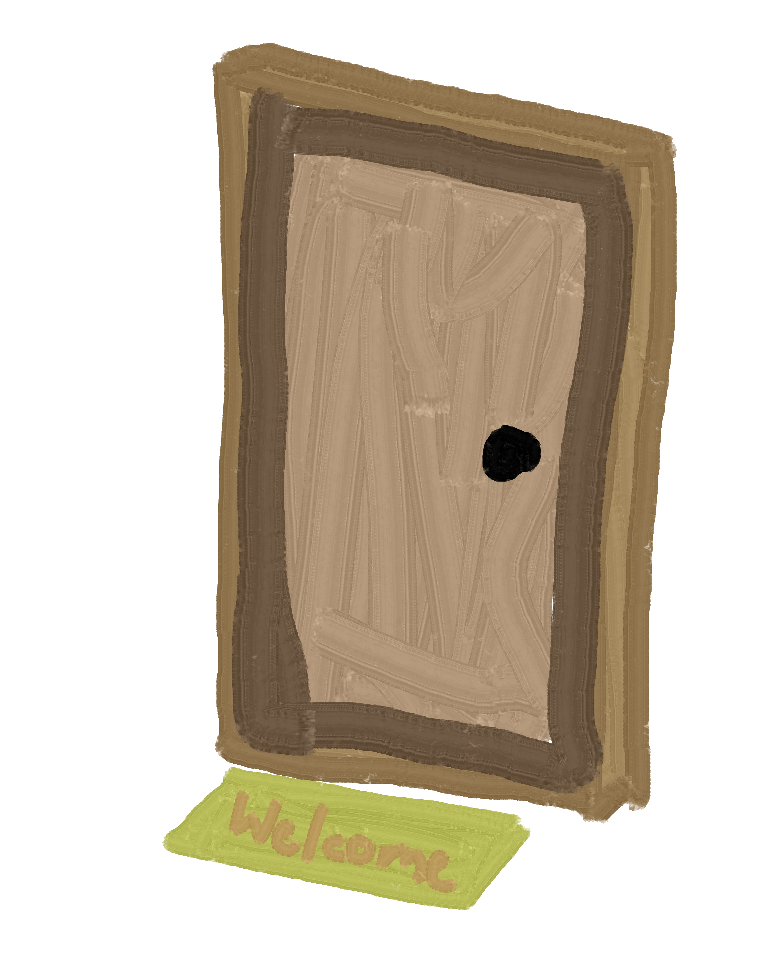
Doormaker
Before
The old version was remembered for a passive hunger mechanic and much fatter hit lines. The pressure was blunt and easier to describe as raw damage.
Now
The boss now opens with Dramatic Open, then repeats Hunger, Scrutiny, and Grasp forever. The damage is lower than before, but the taxes land on the parts of the turn players actually need.
HP is unchanged at 489 on the base band and 512 on the higher band.
Hunger deals 12 x2 or 13 x2. Scrutiny deals 30 or 35. Grasp deals no direct damage.
Hunger exhausts every Attack and Skill you play, Scrutiny shuts off extra draw during your turn, and Grasp makes the first card each turn cost 1 more.
No direct damage. It is just the door swing that starts the loop.
12 x2 or 13 x2. While Hunger is active, Attack and Skill cards are exhausted when played.
30 or 35. You cannot draw additional cards during your turn while the effect is active.
No direct damage. Doormaker gains 4 or 5 Strength, steals 1 Strength and 1 Dexterity, and taxes your first card each turn by 1 Energy.
This is a cleaner boss than the old one because the move order is fixed. The punishment is still nasty, but at least it is honest: if the deck cannot function through card exhaust, draw lock, and energy tax, the fight tells you that immediately.
2. Skulking Colony
Skulking Colony still scales, but the room is less filthy
This elite is still not friendly, but the ugliest part of the old pressure is gone. The room now reads as a cleaner Strength-and-Block race instead of a stat pile plus draw junk.
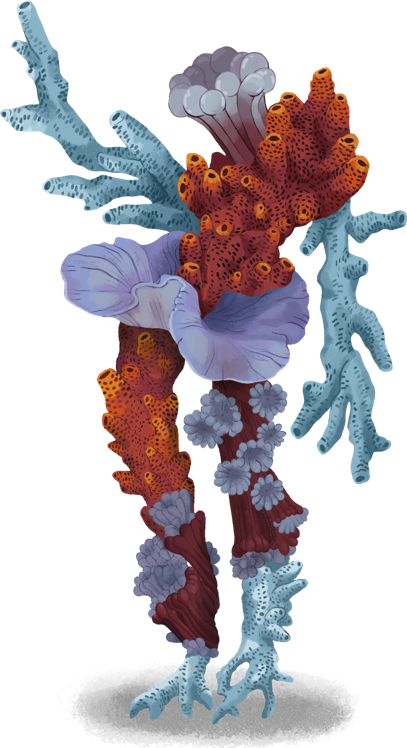
Skulking Colony
Before
The old room hit harder overall and could clog the player with Dazed on top of the normal elite pacing.
Now
HP stays at 74 or 79, but Smash is 9 or 11, Zoom is 14 or 16 with 10 or 13 Block, Piercing Stabs is 7 or 8 x2, and the Dazed line is gone.
Smash is 9 or 11. Zoom is 14 or 16 and also gains Block 10 or 13. Piercing Stabs is 7 or 8 x2.
Inertia still gives the colony 2 or 3 Strength, so the room remains a scaling elite instead of a solved hallway.
The Dazed application is gone. That matters more than one number point because the fight stops muddying your next draw cycle for free.
This is the kind of nerf that improves taste. The room still has a role, but the role is now obvious: block, scale, and hit. It no longer needs junk-card noise to feel dangerous.
3. Haunted Ship
Haunted Ship gets a much clearer rhythm
The attack numbers do not move much here. The real change is that the room now tells you exactly when the hand will get dirty.
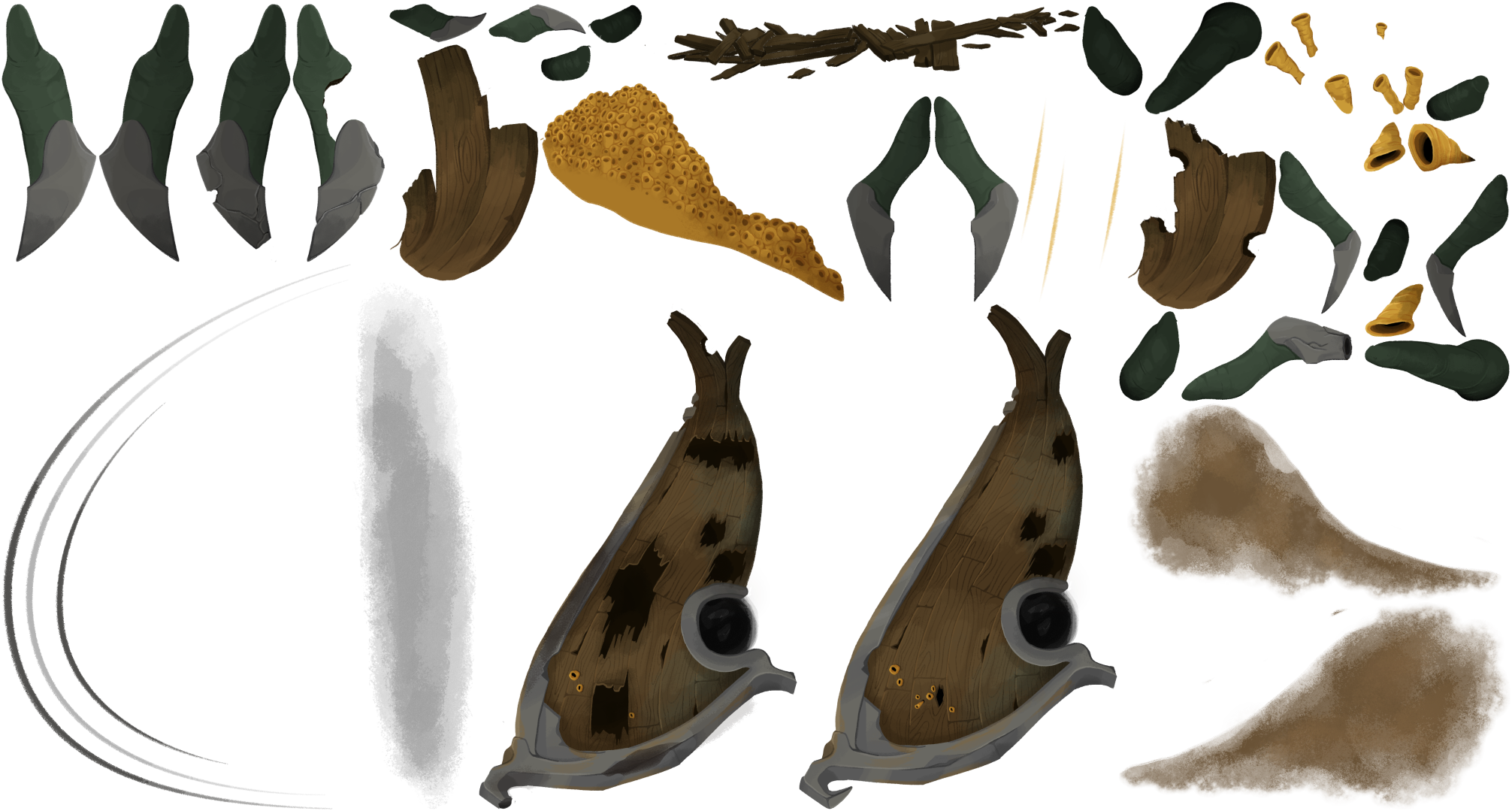
Haunted Ship
Before
Haunt existed, but it did not force the same level of immediate draw-pile respect.
Now
Haunt now adds 5 Dazed to the discard. The fight opens on Haunt, repeats it every even turn, and spends odd turns on Ramming Speed, Swipe, or Stomp.
HP stays at 63 or 67. Ramming Speed is 10 or 11 and applies 1 Weak. Swipe is 13 or 14. Stomp is 4 or 5 x3.
The room starts with Haunt. After that, even turns go back to Haunt and odd turns branch into one of the attacks.
Five Dazed is not cosmetic. It gives the room a real tempo tax, but because the timing is predictable, you can actually plan around it.
This is better design than random sludge. The room tells you when the junk is coming, which means the planning burden shifts from guessing to sequencing.
4. The Forgotten
The Forgotten is the Dexterity thief in the pair
This room is much easier to understand when the two bodies are separated. The Forgotten is the sturdier half, and its threat is tied to Dexterity theft rather than a flat printed hit.
The Forgotten
Before
The encounter was easy to flatten into one generic note, which hid how Dread actually scales in combat.
Now
Miasma steals 2 Dexterity, gains 8 Block, and gives that Dexterity to The Forgotten. Dread starts at 13 or 15, then scales with the stolen Dexterity.
The Forgotten sits at 106 on the base band and 111 on the higher band.
Dread is not just 13 or 15. After Miasma lands, the practical hit becomes 15 or 17 unless you remove the Dexterity swing.
This body is the thicker anchor in Lost and Forgotten. The Block plus Dexterity theft is what drags the fight out.
If you describe this enemy as just a 13-damage hit, you are lying to yourself. The whole point is that the hit scales inside the room.
5. The Lost
The Lost is the Strength thief beside it
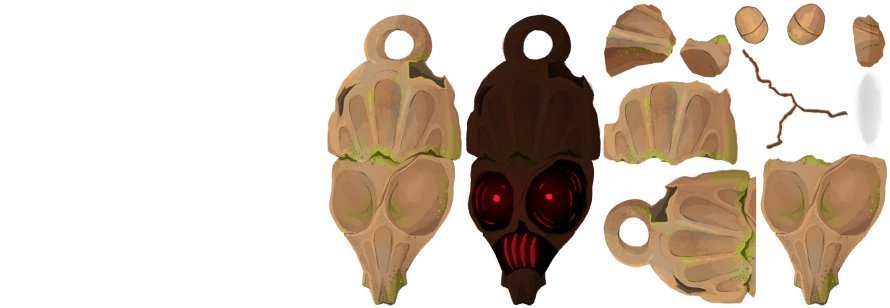
The pair room only makes sense when the partner body is written cleanly. The Lost does not share The Forgotten’s Dexterity line. It steals Strength and leans on a smaller multi-hit follow-up.
The Lost
Before
Older notes tended to blur this body into the same description as The Forgotten, which was sloppy and hid what the room was really asking.
Now
Debilitating Smog steals 2 Strength on both HP bands, then Eye Lasers follows at 4 or 5 x2.
The Lost sits at 93 on the base band and 99 on the higher band.
The Strength theft is fixed at 2 instead of quietly climbing on the higher HP band.
The raw hit is smaller than The Forgotten’s, but the Strength swing still matters because it changes the race for the rest of the room.
This is not a second copy of The Forgotten. It is a different job in the same encounter, and the page now treats it that way.
6. Waterfall Giant
Waterfall Giant finally gives back 10 HP
This one is simple. No fake complexity, no wording game, no hidden rider. The boss is just smaller now, and that matters because boss breakpoints are never abstract.
Waterfall Giant
Before
The boss sat at 250 on the base band and 260 on the higher band.
Now
The HP line drops to 240 on the base band and 250 on the higher band.
The attack kit stays intact. Pressure Gun, Ram, Siphon, and the rest of the room still work the same way.
Ten HP is the difference between a clean burst line and a second cycle for a lot of decks. Boss nerfs this size are not flavor text.
The lower HP line now carries through the lookup pages and any planning that keys off boss thresholds.
This is the good kind of number change. It does one thing, and the thing is immediately relevant to real runs.
Site follow-through
Where the patch now lands on the site
A patch page is useless if the supporting tools still talk like the old version exists. These pages now carry the V101 follow-through tied to the enemy and boss changes above.
Enemy HP Quick Reference
Doormaker, Skulking Colony, Haunted Ship, The Forgotten, The Lost, and Waterfall Giant now use the current move names, pressure notes, and HP bands.
Open page ->Boss & Elite HP LookupBoss and elite encounter tables now pick up the Doormaker rework and the lower Waterfall Giant HP band.
Open page ->Doom CalculatorWaterfall Giant threshold math keeps the lower HP line, and Doormaker notes now reflect the new phase loop instead of the retired attack names.
Open page ->Powers DatabaseHunger, Scrutiny, and Grasp remain searchable from the same patch cycle that created the new Doormaker script.
Open page ->Keep Reading
Don't dead-end after V101 Enemy Boss Changes
Move from this page into the next useful stop for STS2 instead of bouncing after one click.
Related Guides
Use a longform page when you need the why behind the numbers.
Reference Database
Jump into the exact list or lookup table behind this tool.
Next Tools
Chain the next calculator, tracker, or planner while the current context is still fresh.